Faults before the light
Cars log "pending" codes before the check-engine light comes on. Tachwise reads them along with the confirmed ones, and Otto explains each one: what it means and how soon it needs a look.
Tachwise reads your car's OBD-II port, and Otto, our owl, explains what it finds in plain language: trouble codes (including the pending ones that come before the check-engine light), how the battery is holding up, and live data. It also keeps track of what's due and what's wearing: oil, brakes, tires and the rest. Made for everyday drivers, and still handy if you do your own wrenching.
The beta works with your own Bluetooth ELM327 dongle: in Chrome on Android or a desktop, or on iPhone through TestFlight.
No cable, and no box hanging under the dash: the plug is built into the case, so it goes straight into your car's OBD-II port and stays there. This is the first-run design, drawn from its CAD files. Turn it, and open it up.
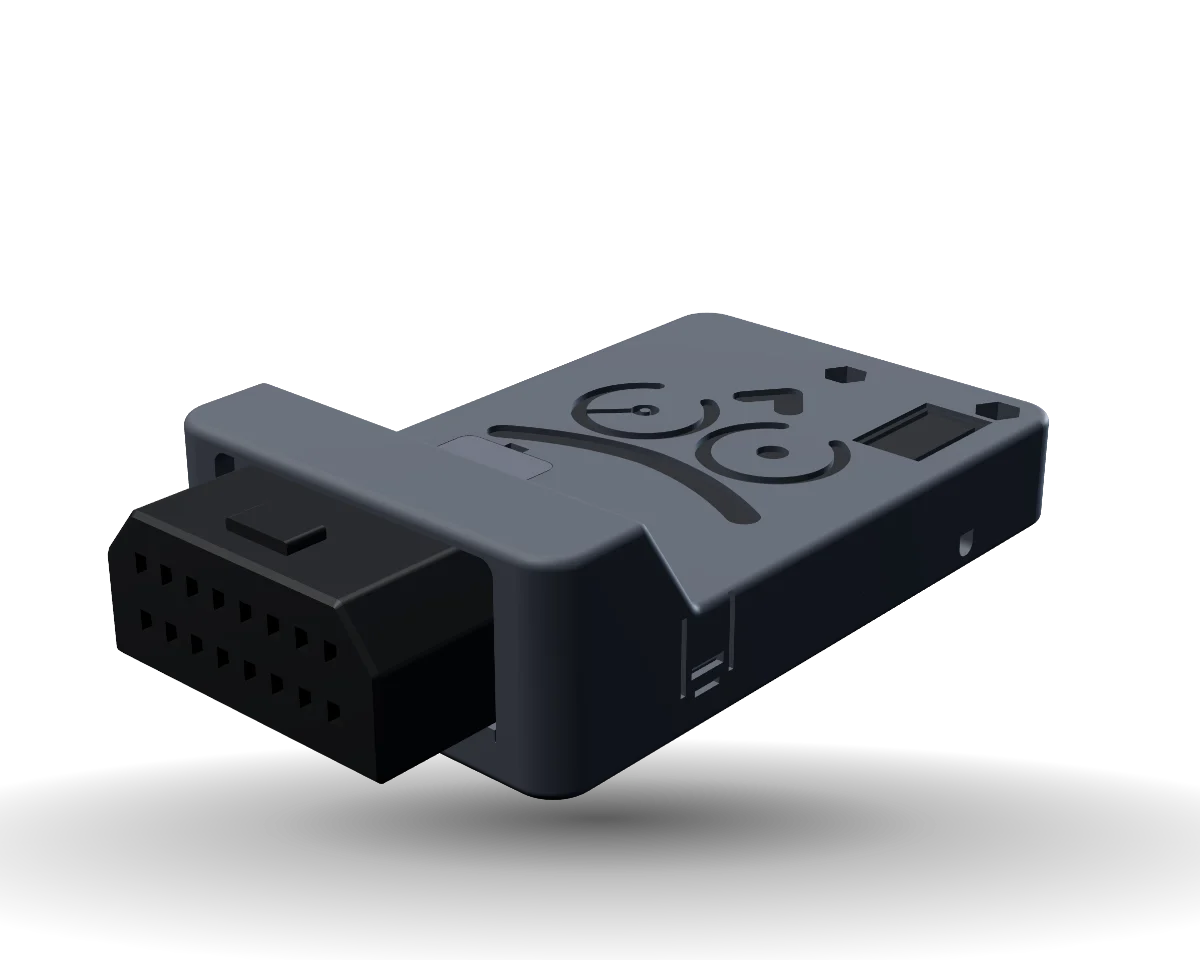
Free. No payment, no deposit. The first boards go to testers from the waitlist.
The Tachwise device has not yet been tested for compliance with ISED and FCC rules, and it is not offered for sale until it has been.
Tachwise reads what the car shares through its OBD-II port. It also keeps track of the parts and fluids that wear out or come due, so a service doesn't sneak up on you.
Readings that come straight from the port, explained by Otto.
Cars log "pending" codes before the check-engine light comes on. Tachwise reads them along with the confirmed ones, and Otto explains each one: what it means and how soon it needs a look.
Speed, rpm, coolant temperature and fuel trims while you drive, with each trip kept on your phone. With a dongle, that's every drive your phone was connected for.
On supported models: the pack's state of charge and state of health, and charging sessions. First up are Hyundai and Kia EVs and the Nissan Leaf, built from community-documented data that we haven't yet checked on a real car. Hybrids get the battery life reading where the car shares it.
Most OBD apps only see your car while your phone is in it. The device stays in the port. After you park, a healthy battery settles to a steady voltage overnight; a tired one sags, and a hidden drain keeps pulling it down. The device samples that resting voltage while the car sleeps, and how far the voltage dips at every start, so Otto can say "your battery is getting weak" before a cold morning says it for him.
Standard OBD-II data doesn't include brake pad wear, tire tread or oil condition, so Tachwise doesn't pretend to measure them. It estimates when each one is due from how far you drive and the services you log, against an interval you can edit.
In the app betaEvery item is estimated from your driving and service log, against an interval you can edit. None of them is a measurement of the part.
Otto is the voice of the app. He tells you what changed and why it matters, in a sentence you'd use yourself, and stays quiet when there's nothing to say.
Your car logged a pending code for the downstream oxygen sensor. No light yet. Keep an eye on it; I will too.
Tire rotation is due in about 800 km.
Your battery rested at 12.6 V overnight. That's normal.
The Tachwise device has run in a car as a prototype, and its own circuit board is ready for production. It isn't for sale yet. The roadmap says where each piece stands.
Start today with a dongle you may already own, or get in line for the device that keeps watching when you're not there.
Have a Bluetooth Low Energy ELM327 dongle (Veepeak, Vgate and many others)? Open the Tachwise app beta, plug the dongle in and connect. It's free and needs no account.
app.tachwise.com on Android and desktop · TestFlight on iPhone
A small unit that stays plugged into the port and keeps watching while the car is parked: the battery's resting curve, the cranking dip, and faults as they appear. Your phone doesn't need to be anywhere near it.
Free. Takes a minute.
The Tachwise device has not yet been tested for compliance with ISED and FCC rules, and it is not offered for sale until it has been.
Tachwise is designed by a small team in Canada. We know the morning it matters: a battery that seemed fine in October won't turn the engine over on the first −20 °C day, because cold cuts what it can deliver just when the engine is hardest to turn over.
You can usually see that coming. The resting voltage slips and the cranking dip deepens over weeks, and that's why the device is being built to keep watching while the car sits in the driveway.
Where each piece actually stands today.
Our firmware, on development boards, has run in a car on the road: reading live data from the OBD-II port and sending it to the phone over Bluetooth.
Designed from the ground up for the OBD-II port, with the plug built right in so the whole device is one small unit. Laid out, checked by independent design reviews, and ready for its first production run.
The app at app.tachwise.com connects to Bluetooth ELM327 dongles in Chrome, and on iPhone through TestFlight. Early, and we're learning which dongles behave.
We're lining up the first production run. The first boards go to hand-picked testers from the waitlist, in their own cars. First milestone: a full night in a real car.
Emissions testing to ISED and FCC rules, which every electronic device needs before it's sold. The price gets set when production quotes and test costs are in.
We contact waitlist members first to place their orders. Nothing is charged before your device is ready to ship.
Where we want to take it: asking Otto questions about your car in plain words, spotting wear early from slow drifts in fuel trims, and pothole and hard-braking events from the device's motion sensor. Ideas we're working toward, not features you can use today.
No date until we can keep it. The waitlist hears first.
Bluetooth Low Energy (BLE) ELM327 dongles. We're building against the most common ones: the Veepeak OBDCheck BLE and BLE+, and the Vgate iCar Pro BLE 4.0. The OBDLink CX and the FIXD sensor should speak the same language, but we haven't confirmed them yet.
Dongles that use classic Bluetooth or Wi-Fi can't be reached from a web page, so they won't work in the beta. BlueDriver, Bouncie and Vyncs are locked to their own apps.
If yours doesn't connect, join the waitlist and pick it under "OBD device you use now". That tells us what to test next.
It estimates; it doesn't measure. Standard OBD-II data doesn't include brake pad wear or tire tread, so Tachwise counts the distance you drive (from the car's odometer where it shares one), starts each countdown from the last service you logged, and compares that with a typical interval from owners' manuals. You can change any interval to match your own manual.
Brakes get a reminder to have the pads and rotors inspected, not a replacement date. If a shop measures your pad thickness or tread depth, you can log it. Treat every due date as a reminder to get something checked, not a verdict on the part. Maintenance tracking is in the app beta.
Yes, through TestFlight, Apple's app for betas. Open testflight.apple.com/join/4G4GT6k1 on your iPhone, install the free TestFlight app when asked, then install Tachwise from it. The web version doesn't work in Safari, which can't talk to Bluetooth devices from a web page.
On Android it runs in Chrome today, dongle and all. A Play Store beta is on its way and needs Google's review first; email support@tachwise.com from the Google account on your phone and we'll add you to the first group.
The app keeps your car's data on your phone. Sending anything to Tachwise is off unless you turn it on, and photos, recordings and routes each have their own switch.
This site counts visits with PostHog without cookies, and never sends your email to analytics. Your waitlist details are used only for Tachwise. We don't sell them.
Your waitlist details are stored in Canada and handled under PIPEDA. We only email you about launches if you tick the box, as CASL requires, and you can unsubscribe any time.
The app beta is free. For the device, the plan is a one-time price with no monthly fee for what it does. We set the price once production quotes are in, and nothing is charged before your device is ready to ship.
When it's ready and has passed its compliance testing. The first boards go to hand-picked testers from the waitlist; then waitlist members get first call to order.
Tell us you want one: join the waitlist, or email support@tachwise.com and say so. When orders open, we contact waitlist members first, with the price. Nothing is charged before your device is ready to ship.
The Tachwise device has not yet been tested for compliance with ISED and FCC rules, and it is not offered for sale until it has been.
From the waitlist, by hand, so the first boards cover as many makes and models as we can. Tell us your car when you join, and tick the email box so we can reach you.
Nearly every car and light truck sold in North America since the late 1990s has an OBD-II port, usually under the dash near the steering column. Tachwise reads the standard data that port shares. How much each car shares varies by make, and the car you put on the waitlist helps us decide what to test first.
No. You're on the waitlist either way. Tick it if you'd like us to email you about launches and the beta; you can unsubscribe any time.
Join the free waitlist for the Tachwise device. No payment, no deposit. All we need is your email; tell us what you drive too, if you like, so we test on the cars people actually own.